
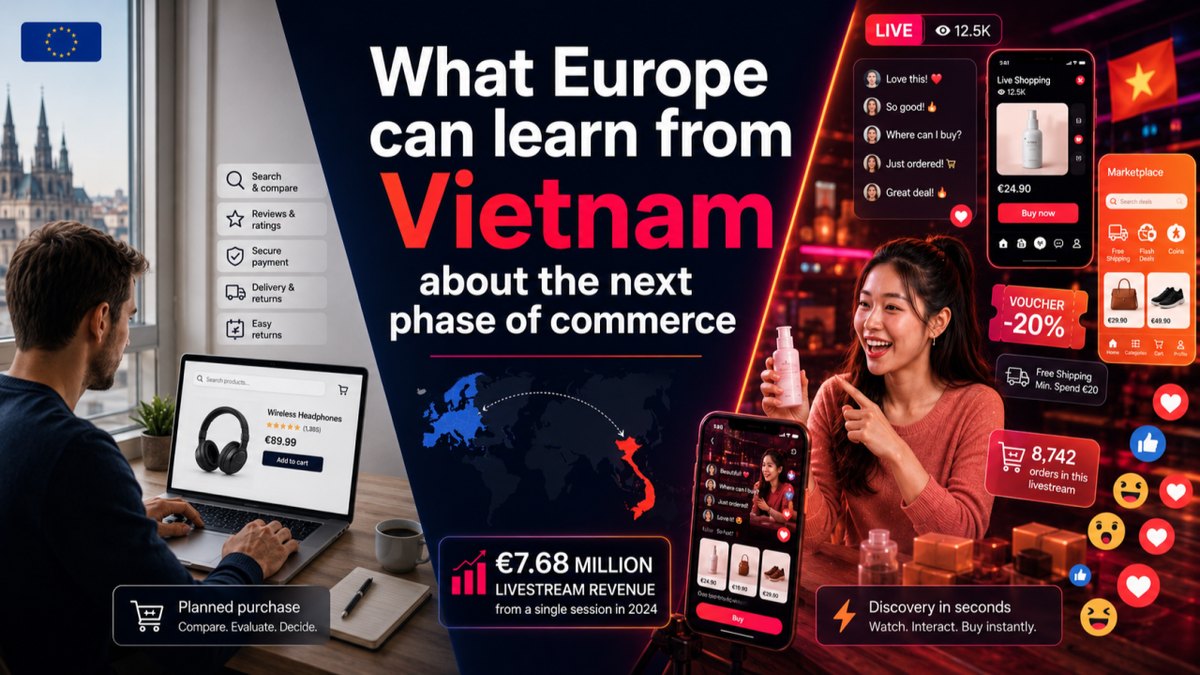
€7.68 million – roughly 237 billion VND – was the reported revenue from a single livestream in 2024 by Vietnamese creator Võ Hà Linh, with 90% of the sales target reached within the first 1.5 hours.
For a German reader, that number may sound almost unrealistic. Despite being tested over the past decade by smaller and larger brands, livestream shopping remains a relatively niche format here. But in Vietnam, it points to something much bigger: the way commerce is increasingly built around content, creators, marketplaces, peer trust, and platform incentives.
Vietnam is one of Southeast Asia’s fastest-growing e-commerce markets, largely shaped by two dominant platforms: Shopee and TikTok Shop.
While Shopee is more marketplace-first, meaning consumers go there to search, compare, find deals, and buy across categories, TikTok Shop is more of a content-first environment. There, discovery often starts through short videos, creators, and livestreams – sometimes before the consumer has even searched for the product.
This difference matters because it changes how products find their buyers.
The journey often starts differently
In Germany, the path to purchase is usually more planned. Customers may choose established retailers or buy through major platforms like Amazon and OTTO , where they can compare prices, reviews, delivery options, return policies, and seller credibility before buying.
In Vietnam, the journey can start much earlier and move much faster. Someone might discover a product through a creator, watch it being tested live, check comments, compare vouchers, and buy directly inside the same platform.
Worth noting, TikTok Shop is currently becoming more visible in Germany; however, the commercial results are still uneven across companies. For many German retailers, it is not yet a pure sales channel, but more of a brand-building touchpoint and a way to reach younger audiences.
Content is closer to conversion
Hà Linh’s example is interesting beyond the revenue number. Her influence did not only come from being visible online. She built trust through product reviews and experience-based content before becoming one of Vietnam’s most prominent livestream sellers.
For many Vietnamese consumers, content is not only a way to create awareness. It can become part of the storefront itself.
Trust is built through different signals
In Germany, trust often comes from brand reputation, certifications, long-form reviews, payment protection, and return policies.
In Vietnam, those things still matter, but trust is often more social and immediate. Word of mouth, peer reviews, comments, ratings, creator recommendations, vouchers, seller responsiveness, and platform mechanics can all influence whether someone feels confident enough to buy.
This is also why livestreaming works so strongly in Vietnam. It does not only show the product. It creates a shared buying moment where people can ask questions, watch others react, compare opinions, and feel reassured before making a decision.
The operating model matters
For brands looking at Vietnam from Germany, entering the market is not only about choosing Shopee or TikTok Shop, or translating an existing campaign.
It requires understanding how content, creators, pricing, payment habits, fulfilment, peer trust, and platform incentives work together as one commerce system.
From my perspective as a Vietnamese working at ProNexum Consulting in Germany, this is what makes the market so interesting to study.
Vietnam is not simply "ahead" or "behind" Germany. It is developing a different commerce operating system.
That idea also connects to a broader question we are exploring at ProNexum Consulting in our upcoming AI Operating Model series: what happens when content, data, marketplaces, operations, and AI become more connected in the way commerce is run?
And in this, Vietnam offers a very concrete example of that shift already happening .
This article was first published on LinkedIn on 14 May 2026: original. It is provided for general information only and does not constitute legal, tax or investment advice.
More articles
 Germany and Vietnam
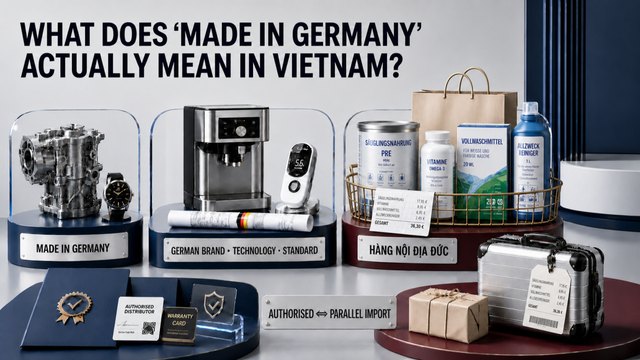
What does “Made in Germany” actually mean in Vietnam?
7 September 2026Read more → Germany and Vietnam
Fulfilment expectations are brutal in Vietnam. Germany plays by different rules.
30 July 2026Read more →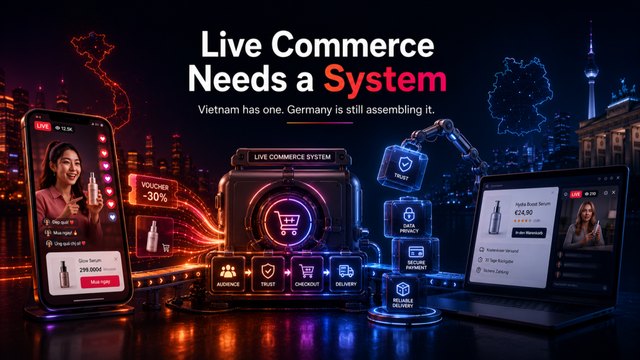 Germany and Vietnam